Street Chaser
- 4.6
- Rating
- 100.00M
- Installs
- Free
- Price

 Analysis by App-foxy
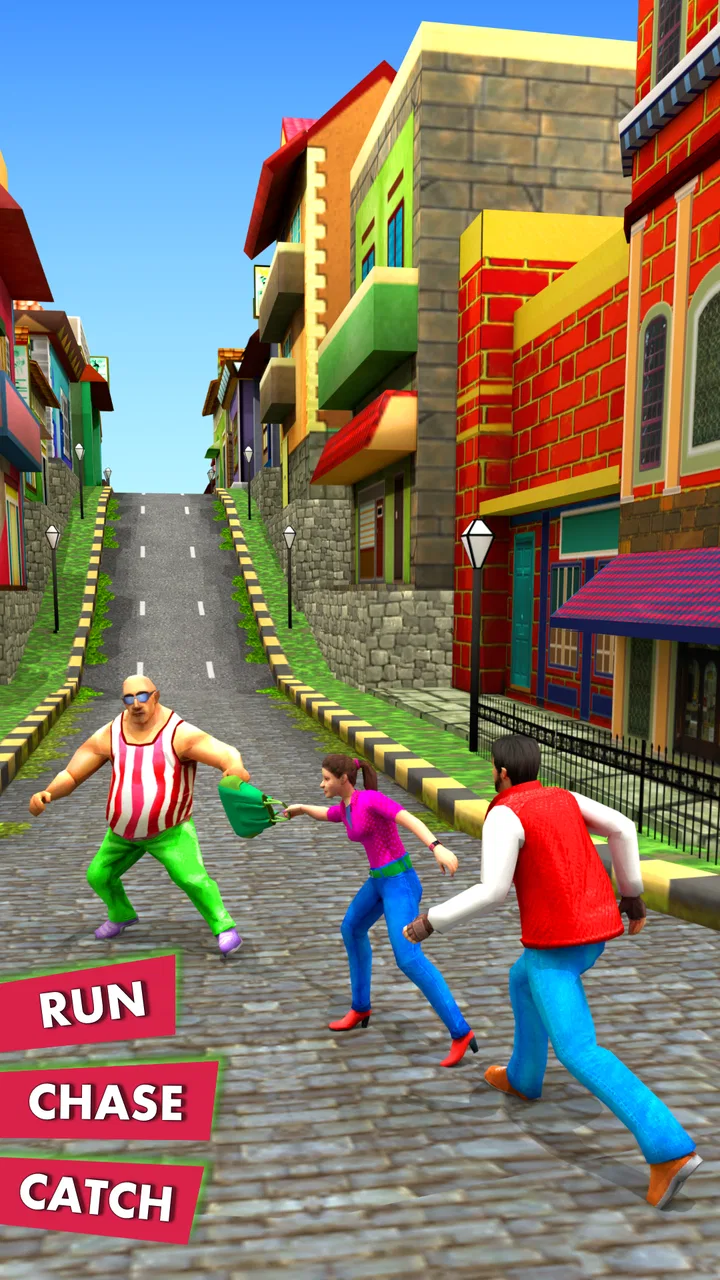
Street Chaser is the kind of adventure game I reach for when I want a quick burst of action rather than a long story or a complicated role-playing system. I play as a robber trying to escape through streets while the chase keeps moving, and the appeal comes from reacting quickly, choosing a safe route, and trying to improve the next run. It is built around the simple idea of running under pressure, but that simplicity makes the first few minutes easy to understand.
After spending time with it, my impression is mixed in a useful way: the game is immediately accessible and satisfying in short sessions, yet its long-term appeal depends heavily on whether you enjoy repeating runs and gradually sharpening your timing. It is free to download, aimed at a Teen audience, and developed by iGold Technologies Private Limited. The game has reached over 100 million installs and holds a 4.5 average from around 356 thousand ratings, so it clearly has a broad audience. Those numbers tell me it is easy to pick up, but they do not automatically make it the right runner for every player.
How the chase feels in everyday play
The central experience is straightforward: I run through a street environment, avoid trouble, and keep the chase alive for as long as possible. That makes Street Chaser a natural fit for small gaps in the day. I can play while waiting for an appointment, during a short commute, or when I have only a few minutes before doing something else. There is no need to remember a complicated plot before starting another attempt.
You May Also Like

 AccuWeather: Weather Radar
AccuWeather Review: A Quick, Clear Forecast for Everyday Decisions
For everyday plans, the best forecast is the one you can understand quickly. AccuWeather makes rain timing, radar, and local conditions easy to act on, with a few trade-offs.

 Hill Climb Racing
Why Hill Climb Racing Still Turns Crashes Into One More Run
A tiny car, a bumpy hill and one more upgrade: Hill Climb Racing keeps resurfacing because its simple chaos makes every near-miss feel personal.

 AliExpress - Shopping App
AliExpress Makes Global Shopping Feel Personal, but Shoppers Bear the Risk
AliExpress turns a global marketplace into a pocket-sized discovery engine. Its reach is useful, its shopping loop compelling, and its trade-offs easy to miss.

 Lords Mobile: Kingdom Wars
Lords Mobile Is a Kingdom-Building Routine, Not a Quick Match
A case-by-case verdict on the building, battles, device demands, and social commitments that make Lords Mobile rewarding for some players and exhausting for others.

 PDF Scanner app - TapScanner
TapScanner Makes Paperwork Easier to Capture, Check, and Share
TapScanner makes scanning with a phone feel less like a rescue operation and more like a dependable step in getting work done. Its capture tools are useful, though not flawless.

 Block Blast!
 Shows How Much a Puzzle Game Can Leave Out
A quiet grid game shows why puzzle players increasingly value instant clarity, repeatable skill and low-pressure play—and where the genre still needs to catch up.
More From Our News Desk
View All News


What gives the game its character is the pressure created by pursuit. A normal endless runner can feel like a quiet test of reflexes, while this one frames the movement as an escape. That framing changes how I read each obstacle. I am not simply collecting distance; I am trying to stay ahead while making decisions quickly enough to avoid turning a promising run into a sudden failure.
The best sessions happen when I stop treating every attempt as a race for a personal record and instead use each run to learn. I pay attention to the point where I usually make a mistake, notice whether I react too early, and adjust on the next attempt. This is a small but important habit: the game becomes more enjoyable when failure provides a practical lesson rather than feeling like a random interruption.
For a new player, I would recommend beginning with relaxed runs instead of immediately chasing the highest possible result. Get used to the movement, watch how quickly the environment demands a response, and identify which visual cues deserve attention. In a fast runner, looking at every detail is less useful than learning to focus on the space directly ahead of the character.
Progress is built around pressure, not exploration
Street Chaser is better understood as a repeatable action game than as a traditional adventure with a large world to investigate. I would not choose it if my main goal were dialogue, puzzle solving, or a carefully paced campaign. Its adventure identity comes from the escape scenario and the changing challenge of staying in motion, not from slow discovery.
That distinction matters when deciding whether to install it. Players who enjoy improving reaction time and repeating a familiar type of challenge may find the loop pleasantly addictive. Players who need constant new mechanics, a substantial narrative, or a clear sense of destination may feel that the chase becomes repetitive sooner.
My most useful approach is to divide play into short goals. Instead of saying, “I need to play until I get an amazing run,” I might focus on surviving a little longer, making fewer rushed turns, or reaching a difficult section without panicking. This turns the pressure into something manageable. It also prevents the common mobile-game habit of continuing after concentration has already dropped, which usually leads to careless mistakes.
The chase can create a particular kind of frustration: a run may feel strong until one hurried decision ends it. That is not necessarily poor design; it is part of the genre’s risk-and-retry structure. Still, it means the game is not ideal for someone looking for a calm, predictable experience. Even a short session asks for attention, especially when I am trying to improve rather than simply pass time.
Spending, progression, and the practical trade-off
The game is free, which makes trying it low-risk. Its in-app purchases range from $0.99 to $74.99 per item, so the spending scale is wide. I would treat that as an important part of the decision before playing regularly. A free entry point is convenient, but the presence of high-priced individual items means I would keep purchases controlled and avoid assuming that every optional offer is necessary for enjoying the core chase.
I also would not install it with the expectation that spending will automatically make the experience fairer or more satisfying. The verified purchase information establishes the price range, but it does not by itself explain how every item affects progress, how often offers appear, or whether a purchase changes competition. Those details should be checked carefully inside the game before paying. The sensible approach is to play first, understand the loop, and spend only when the value is clear to you.
For families, the Teen content rating is worth taking seriously. It is not a reason to reject the game automatically, but it does mean parents should decide whether the chase theme and purchase environment suit the player using the device. I would also avoid handing the game to a younger player with unrestricted payment access. That is basic mobile-game hygiene, particularly when the available purchase range extends well beyond small impulse amounts.
A useful personal rule is to separate progress frustration from purchase temptation. If I fail several times, I ask whether I actually want to improve my technique or whether I am simply annoyed by losing. Buying something while annoyed is rarely a good test of value. Street Chaser works best when I can enjoy the free experience on its own terms and regard optional spending as genuinely optional.
Is the competition fair?
Fairness is a more complicated question than difficulty. A demanding runner can still feel fair when mistakes are understandable and improvement comes from better timing. In Street Chaser, the appeal depends on that relationship between pressure and control. I can accept losing a run when I know I reacted late or chose badly; I am less satisfied when the result feels disconnected from anything I could learn.
I would judge the game primarily as a personal skill challenge unless the particular mode I am using clearly introduces competition with other players. The available facts establish that it is an adventure game with a large player base, but they do not establish a complete competitive structure or explain how purchases interact with rankings, opponents, or shared results. I would therefore avoid promising that it is fully skill-only in every context.
That uncertainty does not prevent me from enjoying it. It simply changes how I evaluate success. I focus on my own consistency, not on assuming that a higher result proves superior skill or that a purchase is required to keep up. If a player’s main reason for installing is serious leaderboard competition, I would recommend checking the in-game rules and purchase effects before investing time or money.
There is also a psychological fairness issue in chase games: a strong run makes the next failure feel more expensive because I have already invested attention in it. I find that taking a short break after two or three frustrating attempts helps. Returning with a clear head gives me a better chance to identify the real problem instead of blaming the game or reaching for an optional purchase.
What I would check before committing
Street Chaser was released on October 10, 2017, and the current version is 6.4.0. It supports devices running Android 8.0 or newer. That makes the operating-system requirement easy to understand for many Android users, but I would still check the device’s available storage and performance before expecting smooth play, especially on an older phone. A compatible operating system does not guarantee that every device will feel equally responsive.
I would also check the version shown on my own device before troubleshooting. If the game behaves differently from what I expect, confirming that it is updated is a more sensible first step than assuming the controls or challenge have changed permanently. Version information matters most when a player is comparing impressions with friends, because two people may not be experiencing exactly the same build.
Another practical question is whether the game suits the way I use my phone. If I want a very quiet game for playing without concentration, this is not my first choice. The chase format rewards attention, and the experience loses much of its value when I am constantly interrupted. On the other hand, if I want a compact action game that can be started and stopped without learning a large rulebook, it fits well.
I would also think about tolerance for repetition. Street Chaser is not a good match for someone who regards replaying a failed section as wasted time. Its structure asks me to repeat the basic activity while trying to improve execution. That can be rewarding, but only if the act of refining reactions is enjoyable in itself.
Who should play it, and who should skip it?
I would recommend it to players who like mobile runners with a stronger sense of pursuit, quick decisions, and short repeatable sessions. It is particularly suitable for someone who enjoys turning a failed attempt into a small lesson. The free download makes it easy to test that loop without making an immediate financial commitment.
I would be more cautious for players who want a deep story, relaxed exploration, or a clearly defined long-form adventure. Those players may have a better experience with a narrative adventure or a slower puzzle game. Likewise, anyone uncomfortable with a broad in-app purchase range should decide in advance whether they can ignore optional offers comfortably.
Compared with a conventional endless runner, Street Chaser puts more emphasis on the feeling of being pursued. Compared with a story-driven adventure, it offers less reason to explore slowly and more reason to react quickly. Compared with a competitive multiplayer game, its appeal is easier to enjoy privately, although I would inspect any specific competitive features before making claims about balance.
One everyday use case shows its strengths clearly. Suppose I have ten minutes before a train arrives. I can start a run, concentrate on one improvement goal, and stop without needing to remember a complex quest. If I am already tired or distracted, however, the same session may feel irritating because the chase punishes careless attention. The right mood matters more here than it does in a passive time-killer.
My trust verdict after weighing the unknowns
My final view is that Street Chaser is worth trying as a free adventure runner, provided I approach it as a skill-and-repetition game rather than a complete story adventure. The large install base and strong average rating suggest that many players find the formula appealing, while the simple entry point makes it easy to form my own opinion quickly.
I would keep expectations realistic. The game’s strongest quality is the immediate chase: start, react, survive, and try again. Its main weakness is the same structure, because repeated escapes may feel narrow if I need constant novelty. The purchase range also deserves attention, not because spending is automatically required, but because the difference between a free trial and an expensive optional item is substantial.
My recommendation is to play several sessions without buying anything, decide whether the controls and pressure genuinely hold my attention, and then read each purchase description carefully if I am still interested. I would not use a purchase to solve frustration, and I would verify any competitive rules before treating paid items as part of a fair contest.
In short, Street Chaser is a focused choice for quick, tense mobile action. I enjoy it most when I treat every run as practice and measure progress by better decisions rather than by one lucky escape. If that sounds like your kind of challenge, the free download is an easy invitation to test it. If you want a rich narrative, calm exploration, or completely transparent competitive systems, I would look elsewhere before committing.
FAQs for Street Chaser
01What is Street Chaser, and what can I expect from the gameplay?
Street Chaser is an engaging endless runner game where players navigate through busy streets to catch thieves and reclaim stolen items. The gameplay is fast-paced, with users dodging obstacles, collecting power-ups, and completing various missions. Expect vibrant graphics, dynamic environments, and challenging levels that keep the excitement alive.
02Is Street Chaser free to play, or are there in-app purchases?
Street Chaser is free to download and play, but it includes optional in-app purchases. These purchases can enhance the gaming experience, offering items such as power-ups, character upgrades, and additional lives. Players can enjoy the game without spending money, although investing in upgrades can provide advantages.
03What are the system requirements for Street Chaser on Android and iOS?
For optimal performance, Street Chaser requires Android 4.1 or higher and iOS 9.0 or later. The game is compatible with both smartphones and tablets. Ensure your device has adequate storage and is updated to the latest software version to avoid any performance issues during gameplay.
04Can I play Street Chaser offline, or do I need an internet connection?
Street Chaser can be played offline, allowing players to enjoy the game without an internet connection. However, certain features such as leaderboards, social sharing, and in-app purchases will require connectivity. Playing offline is ideal for uninterrupted gaming sessions in areas with limited internet access.
05How does Street Chaser handle user data and privacy?
Street Chaser adheres to standard data protection practices. The app collects minimal personal data necessary for gameplay and enhancing user experience. It’s essential to review the app’s privacy policy to understand how your data is used and ensure you’re comfortable with the terms before playing.
Pros
- Engaging multiplayer mode.
- Smooth and intuitive controls.
- Varied and dynamic missions.
- Regular updates with new content.
- Challenging yet rewarding gameplay.
Cons
- Ads can be intrusive.
- Some levels feel repetitive.
- In-app purchases can be pricey.
- Occasional lag in older devices.
- Limited customization options.

Street Chaser
Gallery